Perspective Core Hub
Sterile ophthalmic instruments laid on a tray in a dim refractive surgery suite

Procedure comparison

Compare SMILE, SMILE Pro, FS-LASIK, TransPRK and phakic IOL side by side on suitability, recovery and ocular surface considerations so you can frame better questions for a clinician.

Factor
SMILE
SMILE Pro
FS-LASIK
TransPRK
Phakic IOL
Flap
No flap
No flap
Flap created
Surface only
No cornea removal
Laser step
Femtosecond only
Faster femtosecond
Two-laser sequence
Excimer only
Lens implant
Ocular surface
Dryness may follow
Similar profile
Highest dry-eye load
Most surface-sparing
Cornea untouched
Correction range
Common short-sight
Common short-sight
Wide range, mixed
Thin-cornea cases
Upper range high Rx

General orientation only. Your own measurement — refraction, corneal thickness, tear film, pupil and prescription stability — decides what applies to you.

How to read this page

Five procedures, three questions that actually separate them

Corrective laser surgery options are usually sold in one lump, and that is where the confusion starts. The real differences sit in three places: whether your cornea can spare the tissue a given technique removes, how long your eye needs before the surface settles, and how much of your prescription the method reliably covers. Below, SMILE, SMILE Pro, FS-LASIK, TransPRK and phakic IOL are set out on those three axes so you can walk into a consultation with specific questions instead of a general hope.

Use this as a study aid, not a booking tool. Nothing here replaces a measurement session, and no comparison table can tell you what your tear film is doing at eight in the morning on a Jakarta commute.

The five options, one at a time

Each entry covers what the technique does, who tends to suit it, and the recovery pattern patients ask about most.

No flap · single laser

SMILE

Small-incision lenticule extraction.

A femtosecond laser carves a thin lenticule inside the cornea, and the surgeon lifts it out through a small incision. There is no flap to fold back, so the surface stays quiet and most people are back to screens within a few days. It suits everyday short-sight and mild astigmatism, and it is often the first suggestion when someone is nervous about a flap. Very high prescriptions and irregular corneas usually push the choice elsewhere.
No flap · faster cycle

SMILE Pro

Same idea, shortened laser step.

SMILE Pro is the newer generation of the same flap-free approach, with the laser step compressed to a few seconds and built-in alignment aids that track the eye during treatment. The practical difference for a patient is less time under the laser and less suction pressure on the eye, which matters if you find the fixation light hard to hold. Suitability and recovery pattern stay close to standard SMILE, so the choice often comes down to which platform your clinic runs and what your measurements support.

Flap · two lasers

FS-LASIK

Femtosecond flap, excimer reshape.

The femtosecond laser creates a thin flap, the surgeon folds it back, and an excimer laser reshapes the tissue beneath. Vision often clears within a day, which is why it remains the familiar standard for a wide range of prescriptions, including higher short-sight and astigmatism combinations. The trade-off is a corneal flap and the dryness that tends to accompany it in the first months. Eyes that already run dry, or corneas that are thin for the amount of correction asked, are usually steered toward a flap-free route.

Surface only · no incision

TransPRK

Laser works on the outer surface.

TransPRK skips both flap and alcohol, with the excimer laser removing the surface layer and reshaping the cornea in one pass. Nothing is cut, so there is no flap complication risk and the approach is often chosen when the cornea is thin or the surface is already fragile. Recovery is the honest cost: the first days are uncomfortable and functional vision can take a week or more to settle. For contact-sport players, people in dusty outdoor work, and thin corneas, that trade is frequently worth it.

Lens implant · cornea intact

Phakic IOL

Added lens, natural lens kept.

A phakic IOL is a small lens placed inside the eye in front of your natural lens, correcting high short-sight or astigmatism that laser reshaping cannot safely cover. Corneal tissue is never removed, which is why it is discussed when the prescription is too high or the cornea too thin for laser. It is an intraocular procedure with its own monitoring requirements, and the trade-off is a longer clinical relationship rather than a longer healing week. Endothelial cell counts and anterior chamber depth become part of the regular check-ups.

Inside the room where the difference shows

Platform names only tell you so much. These are the instrument stages and surfaces a comparison actually turns on — the delivery cone, the tracking optics, the drape discipline — photographed in a working refractive suite.

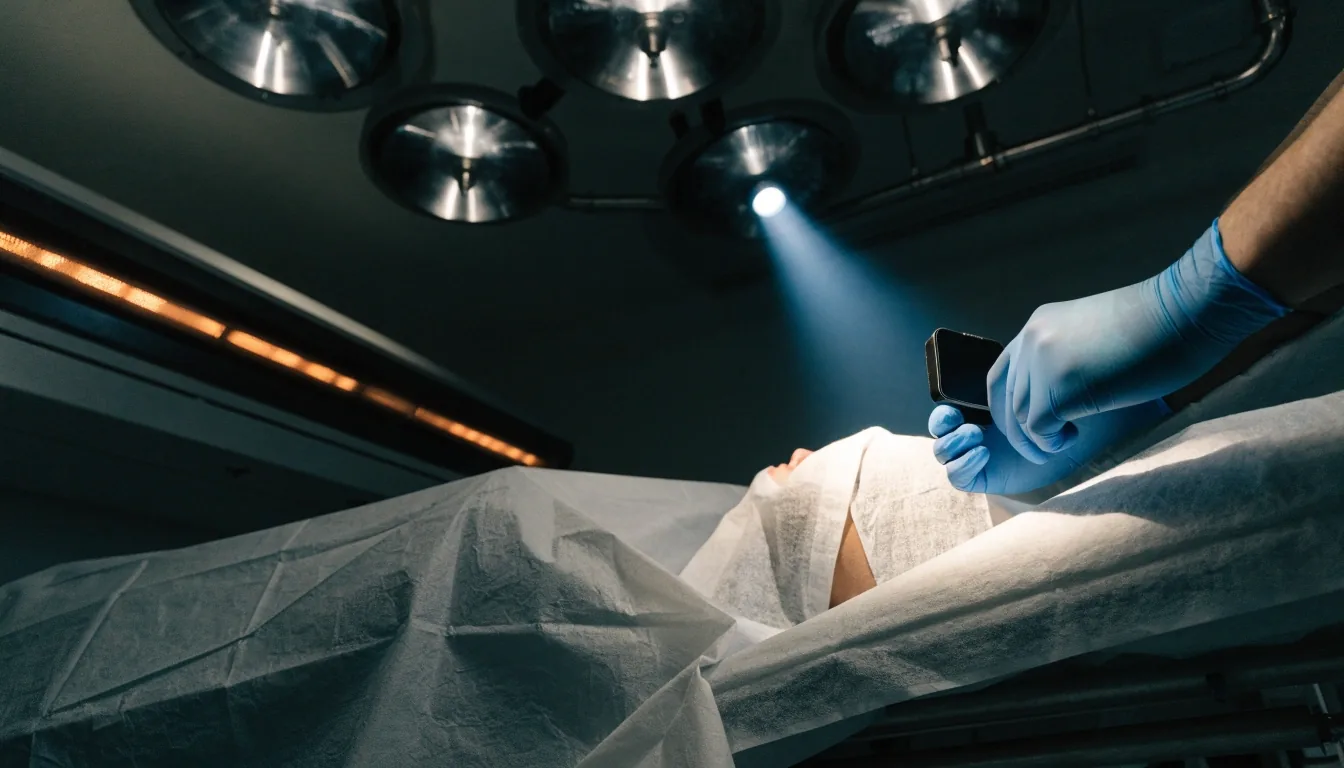
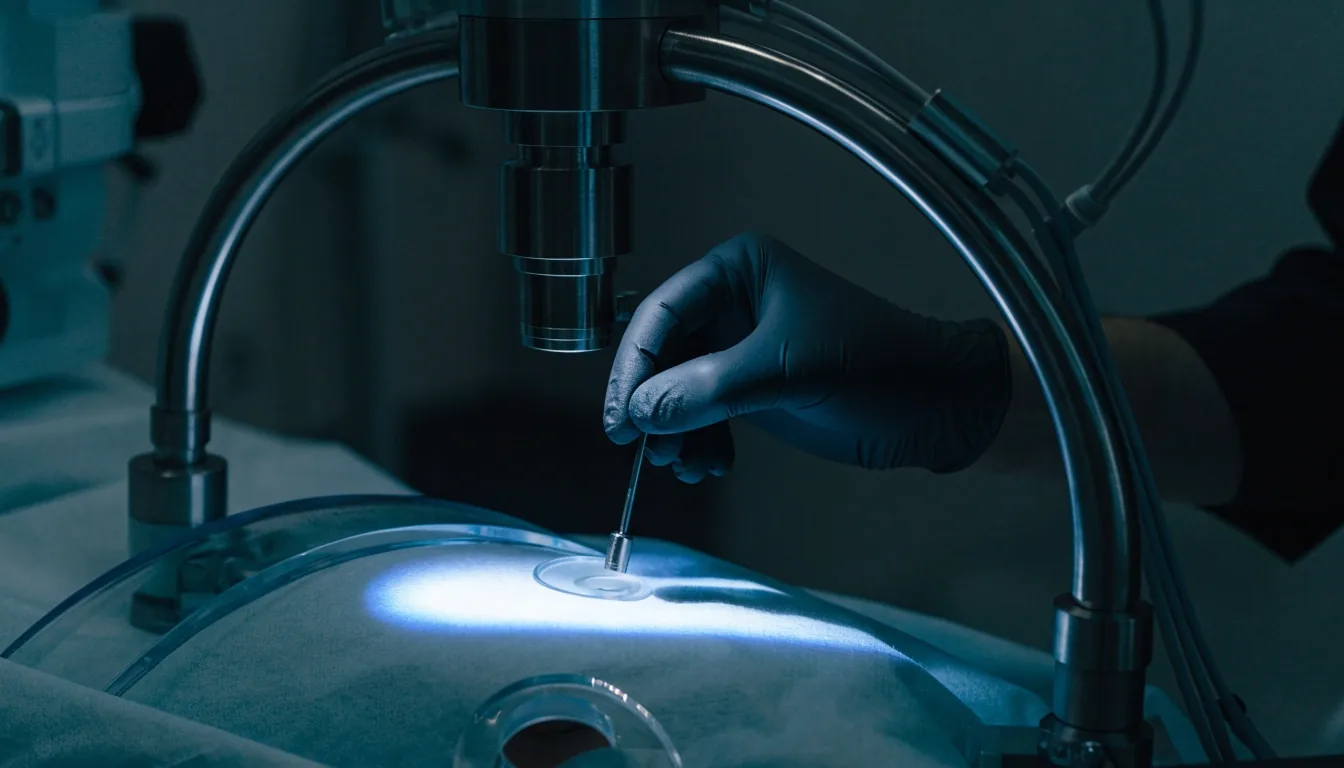
Femtosecond laser delivery cone above a surgical drape in a dim suite
The femtosecond delivery cone. Flap-based and flap-free techniques split here first.
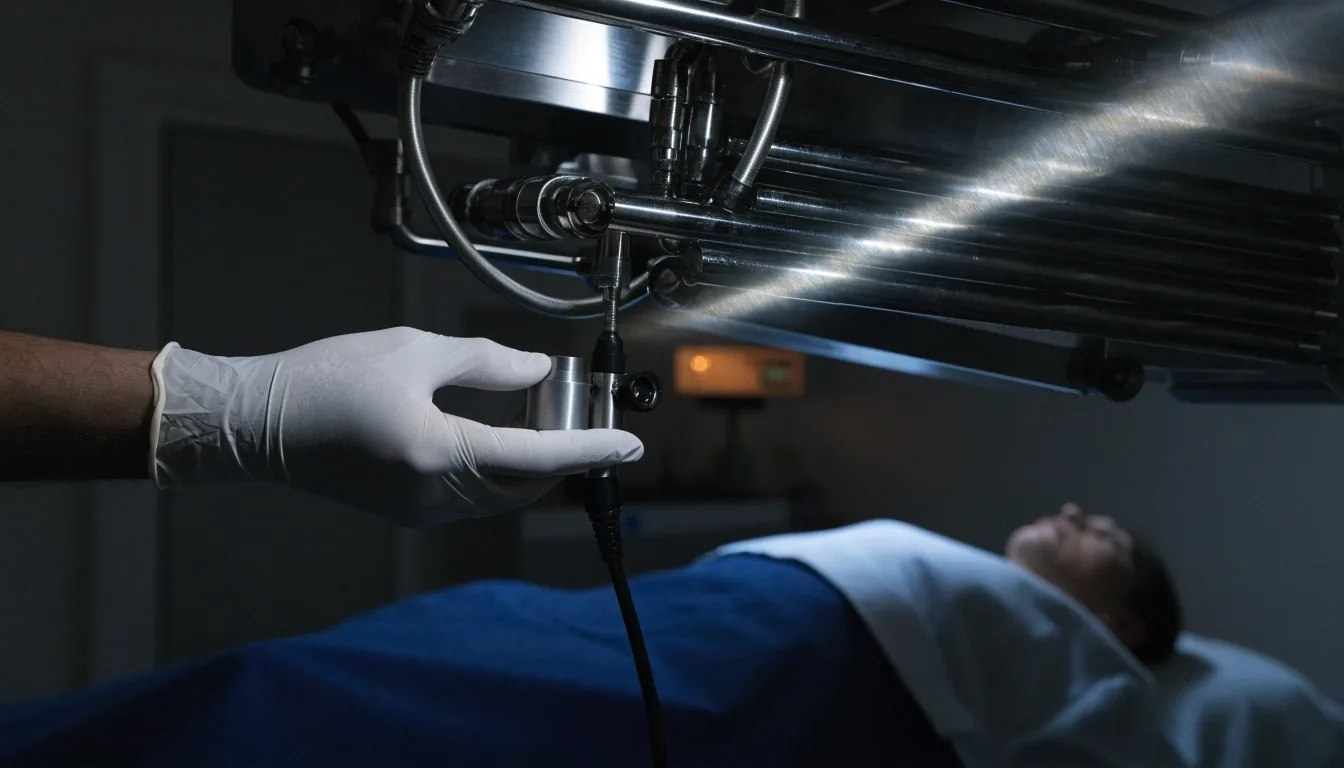
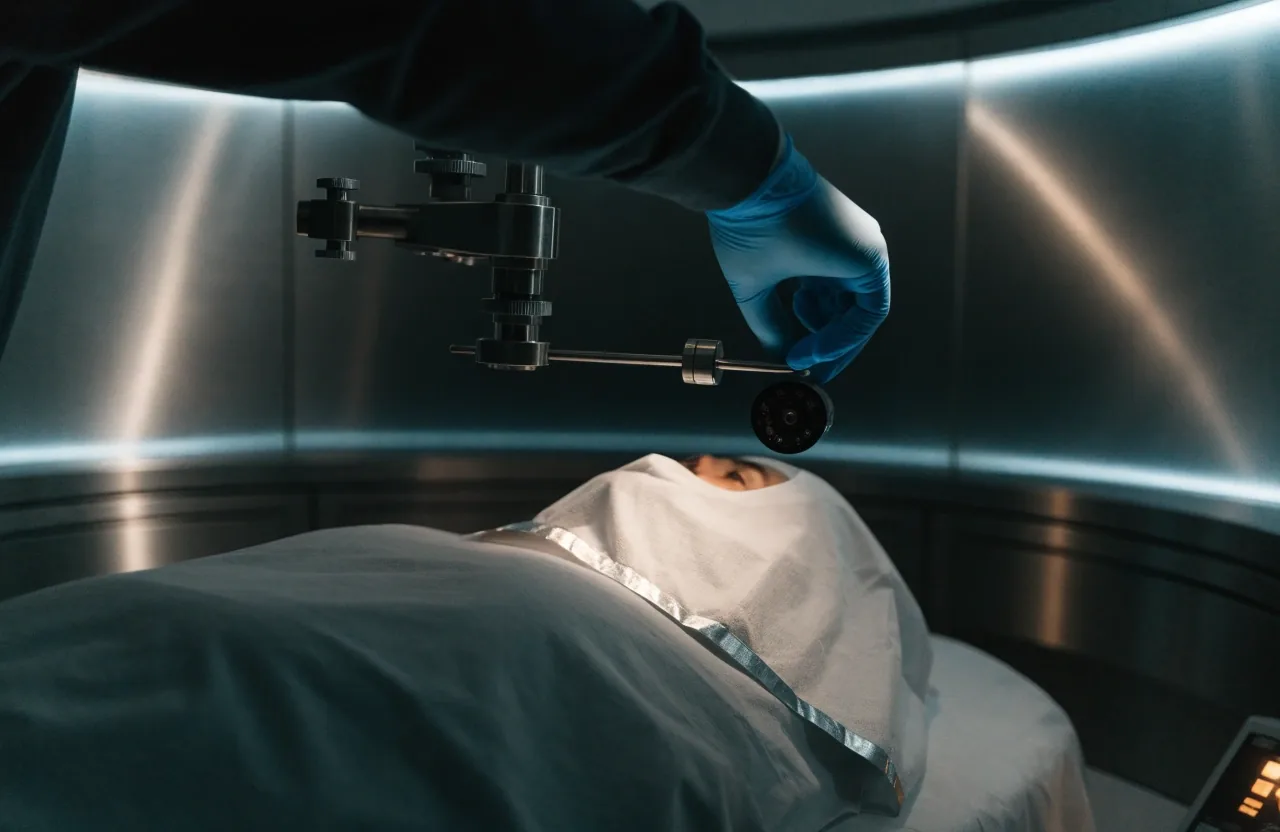
Excimer laser eye-tracking optics in a dim treatment room
Eye-tracking optics on an excimer platform. Alignment quality shapes the surface outcome.
Folded sterile drape with an instrument silhouette on an ophthalmic table
Drape discipline. Surface-only techniques keep the outer layer of the cornea the working field.
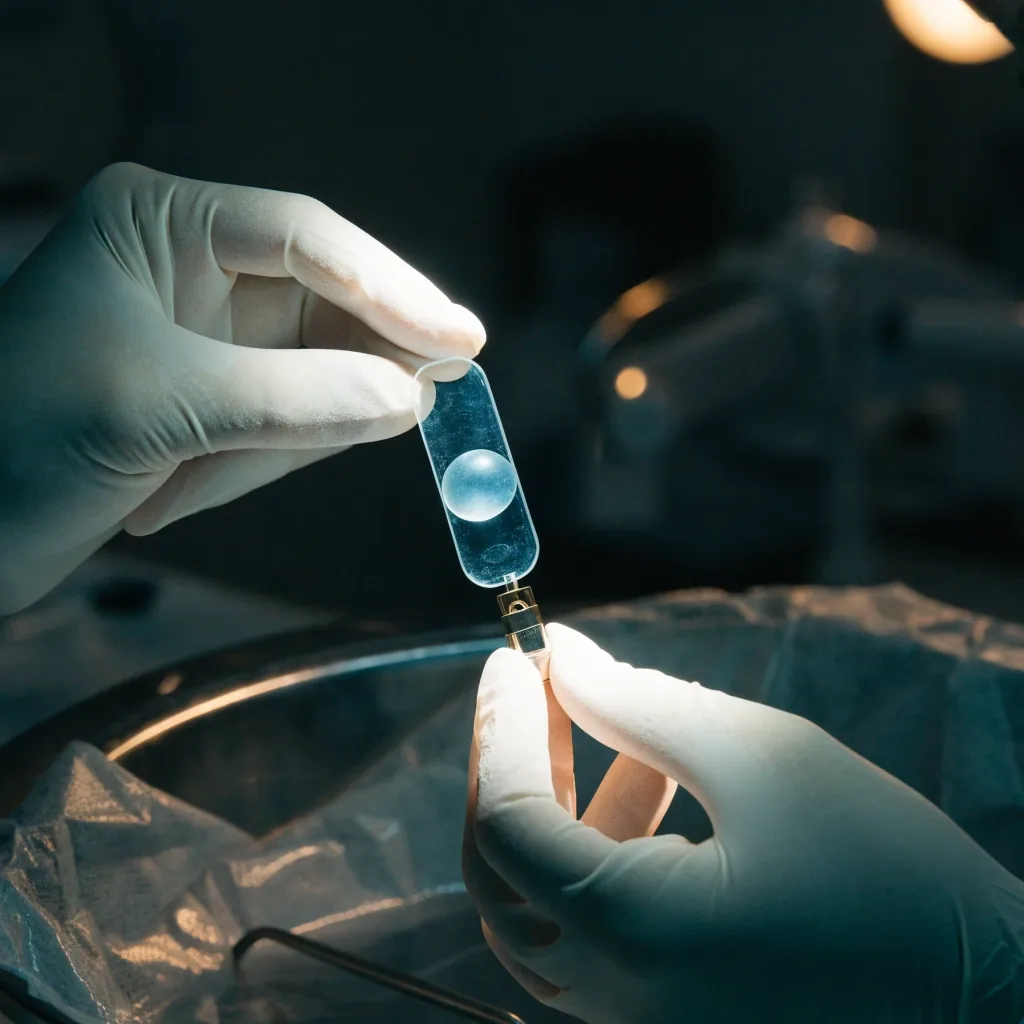
Phakic intraocular lens in an insertion cartridge on a steel tray
A phakic IOL in its insertion cartridge. An added lens, not a reshaped cornea.

Ocular surface

The axis patients notice months later

Tear film is the difference that shows up after the novelty wears off. Two eyes can reach the same vision line on day one and feel completely different by week six.

Surface-only work

TransPRK removes no flap and leaves no interface under the surface, so the corneal nerves regenerate from the edges inward without a flap edge interrupting them.

Flap-based work

FS-LASIK cuts a flap, and the nerves crossing that plane take longer to recover. Dryness in the first months is the most common complaint, and it is worth asking how your clinic tracks it.

Lenticule extraction

SMILE and SMILE Pro keep a smaller incision and no flap, which sits between the two extremes on surface comfort. It is a common middle path for people with mildly dry eyes.

Cornea untouched

A phakic IOL leaves the cornea and its nerves alone entirely. The follow-up instead tracks the implanted lens and the eye's internal structures.

Read the full chapter on ocular surface and recovery

What the first weeks look like, honestly

Recovery ranges rather than promises, because two people on the same day with the same prescription often report different weeks.

Days one to three

FS-LASIK and both SMILE variations usually read a screen and get around by day two. TransPRK is the outlier: expect watering, light sensitivity and a mostly closed eye through the first days.

Week one

Most flap-based and SMILE patients are close to functional vision. TransPRK patients are often usable but not comfortable, with blurred near vision that settles gradually.

Month one

Visual stability reaches a plateau and dryness is usually at its most noticeable for flap-based work. Lubricants on a schedule, not on demand, tend to help most here.

Beyond three months

Surface comfort and vision continue to drift toward their longer-term level. This is where a phakic IOL differs — the checks focus on the implanted lens and internal measurements instead of surface healing.

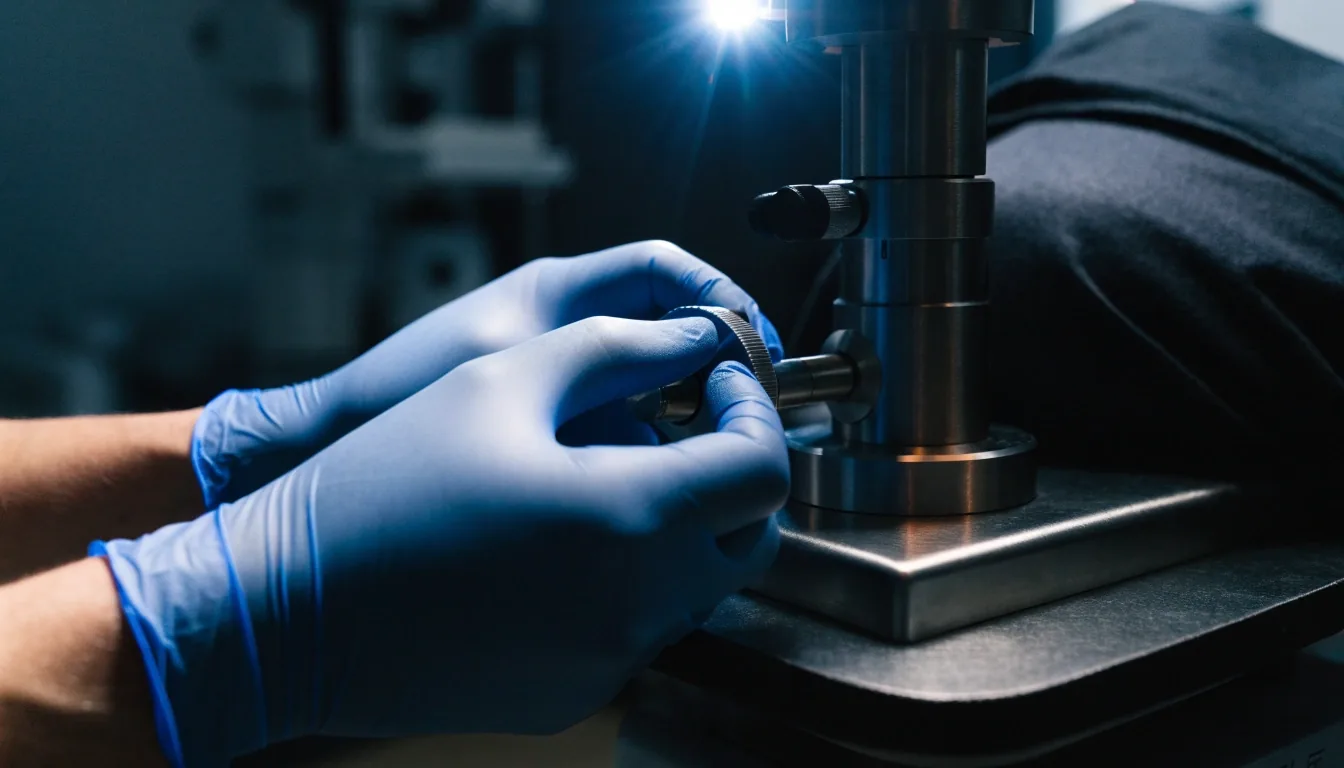
Gloved hands adjusting a slit-lamp control in a dim examination room at night

Bringing your own evidence

The four measurements that decide the answer

Ask for these numbers at your assessment. A clinic that has them ready is a different conversation from one that reaches for a brochure.

Corneal thickness

The number that quietly rules options in or out. Thin corneas push toward surface-only or lens-based routes.

Tear film quality

A surface that is already struggling changes the risk balance for flap-based work. It deserves a measurement, not a guess.

Prescription stability

If your glasses prescription has moved recently, most surgeons will ask you to wait before operating on a stable eye.

Pupil and aberrations

Large pupils and irregular optics affect night vision after surgery, and some platforms handle them differently.

Questions worth carrying into the consultation

Six short questions that turn a generic recommendation into a comparison you can actually follow.

What tissue is being removed?

Ask for the depth in numbers, not adjectives. It is the single fastest way to see why one technique was chosen over another.

Is a flap involved?

If yes, ask how dry your eyes are today and how that is expected to change over the first six months.

What is my residual thickness?

Surgeons keep a safety margin under the treated tissue. Knowing your remaining thickness explains the boundaries.

Which platform would treat me?

Technique names hide the machine. Ask which platform is planned and whether the clinic keeps more than one.

What happens if it needs a second pass?

Enhancement options differ between flap-based, surface and lens-based routes. It is fair to ask before, not after.

What would make you say no?

The clearest sign of a careful assessment is a surgeon who can describe the case they would decline.

Comparison questions we hear most

Short answers on the parts of refractive surgery comparison that get tangled in marketing language.

Go to the patient suitability guide

Is SMILE always a better choice than FS-LASIK?

No. Flap-free work tends to leave a calmer surface, but FS-LASIK handles some prescription and astigmatism combinations a lenticule approach does not. The deciding factors are your corneal thickness, your tear film and how high your prescription sits — not which name is newer.

Why would anyone choose TransPRK if recovery is slower?

Because the slower week buys a surface that keeps more of its original structure. Thin corneas, contact-sport players and people who work outdoors in dust or wind often accept the trade. It is also the route that avoids the flap-related risks entirely.

When does a phakic IOL come into the conversation?

When the prescription is high enough that removing corneal tissue would leave too little behind, or when the cornea is naturally thin. Because no corneal tissue is removed, it is also discussed for eyes where laser reshaping would carry more surface risk. It is an internal procedure with its own follow-up schedule.

Does SMILE Pro change who is suitable?

Mostly the same candidates, with a shorter laser step and less suction time on the eye. If you struggle to hold a fixation light or find the pressure uncomfortable, that difference is worth asking about directly. Suitability is still decided by your measurements, not by the generation name.

Can I compare these options without an examination?

You can learn the axes here, and that is genuinely useful — it stops a consultation from turning into a pitch. What you cannot do is apply them to your own eye. Corneal thickness, tear film and prescription stability come from measurement, and they change the answer more than any table can.

Next step: get your own numbers

This page is an educational resource from Perspective Core Hub, comparing modern refractive techniques and platforms so patients in Indonesia can ask sharper questions. To move from general comparison to your own case, book a measurement session. Bring the four numbers, bring the six questions, and ask which technique the assessment supports — and which it rules out.

Clinic hours

  • Monday to Friday09:00–18:00
  • Saturday09:00–13:00
  • SundayClosed

Perspective Core Hub · Jl. Cikini Raya No. 58, Menteng, Jakarta Pusat, DKI Jakarta 10330, Indonesia

+62 21 5189 4276 · [email protected]